How can an outdated building be transformed without starting from scratch? Major refurbishment reinvents existing properties to meet users’ changing expectations, improve energy performance and enhance long-term asset value. Explore what it involves, the applicable regulations and the key stages of a successful project.
As the real estate sector works to reduce carbon emissions and use land more efficiently, major refurbishment also provides a way to enhance existing property assets while addressing the objectives of France’s Tertiary Decree.
What work does it involve? How does major refurbishment differ from conventional renovation? Which stages need to be planned to deliver a successful project?
What is major refurbishment?
Major refurbishment is a form of renovation that fundamentally transforms an existing building. Conventional renovation primarily modernises spaces or replaces selected equipment. Major refurbishment involves work on elements that shape the building’s structure and overall function.
It can change a building’s layout, technical performance, circulation routes or use. It restores value to an outdated property while meeting users’ changing expectations and evolving regulatory requirements.
In commercial real estate, it can involve office buildings, hotels, industrial facilities, educational buildings and managed residences.
How does it differ from conventional renovation?
Conventional renovation generally modernises a building without fundamentally changing its structure or the way it functions.
Major refurbishment involves substantial work that may affect the load-bearing structure, façades, technical systems or spatial layout. Its purpose is to secure a lasting transformation of the property.
What can major refurbishment involve?
Major refurbishment projects can take various forms:
- Transforming an outdated office building to meet changing workplace needs.
- Converting an industrial building into commercial space.
- Fully renovating a hotel, including technical upgrades and energy performance improvements.
- Changing a property’s use.
- Refurbishing an occupied building while keeping part of its activities running.
- Creating additional floor space through an extension or additional storeys.
What work falls within major refurbishment?
Major refurbishment can affect all or part of a building. It generally involves several trades and requires close coordination between specialist teams.
Work can alter the building’s structure
Structural work may involve:
- Strengthening foundations.
- Repairing or modifying load-bearing elements.
- Creating or altering floors.
- Adapting vertical circulation routes.
- Creating new floor openings or staircases.
These works help adapt the building to new uses or regulatory requirements.
Work can upgrade the façades and building envelope
Major refurbishment may also involve the building envelope to improve energy performance and occupant comfort.
This can include:
- Refurbishing façades.
- Replacing external windows and doors.
- Improving thermal insulation.
- Upgrading solar shading.
- Incorporating solutions that enhance energy performance.
Work can replace technical systems
Technical systems often undergo a complete overhaul, including:
- Heating, ventilation and air conditioning (HVAC).
- Electrical installations.
- IT networks.
- Fire safety systems.
- Building management systems (BMS).
These systems play an essential role in the building’s performance and future operation.
Work can enable a change of use
Some major refurbishment projects involve a complete change in the building’s use.
An office building may, for example, be converted into a managed residence or an educational facility. These projects generally require significant changes to the structure, technical systems and internal spaces.
How do light renovation, full renovation and major refurbishment differ?
Light renovation primarily improves finishes and appearance
Light renovation focuses mainly on finishes and the visual quality of spaces.
It may include painting, floor coverings, lighting or the replacement of selected equipment, without affecting the building’s structure.
Full renovation modernises the building as a whole
Full renovation generally involves replacing technical systems, reconfiguring spaces and improving energy performance, without major structural changes.
Major refurbishment fundamentally transforms the property
Major refurbishment goes further, creating lasting improvements to the property’s performance, functionality and appeal.
It can reposition a building in its market, extend its operational life and adapt it to new uses.
Why undertake major refurbishment?
It modernises an existing building
Many commercial buildings constructed decades ago no longer meet today’s standards for comfort, flexibility or environmental performance.
Major refurbishment adapts them to users’ expectations while enhancing their appeal.
It improves energy performance
Energy considerations now play a central role in property strategies.
Major refurbishment allows improvements to the building envelope, technical equipment and control systems to be coordinated, reducing energy consumption over the long term.
It also provides an effective way to meet the targets set by France’s Tertiary Decree.
It adapts spaces to changing uses
Working practices are evolving rapidly.
Users increasingly seek flexible spaces that support collaboration and provide greater everyday comfort. Major refurbishment makes it possible to rethink floor layouts, occupant services and shared spaces.
It enhances property value
Transforming an existing property helps maintain its market value, strengthen its appeal to prospective tenants and extend its operational life.
Major refurbishment therefore supports lasting improvements in property value.
These projects illustrate major refurbishment in commercial real estate
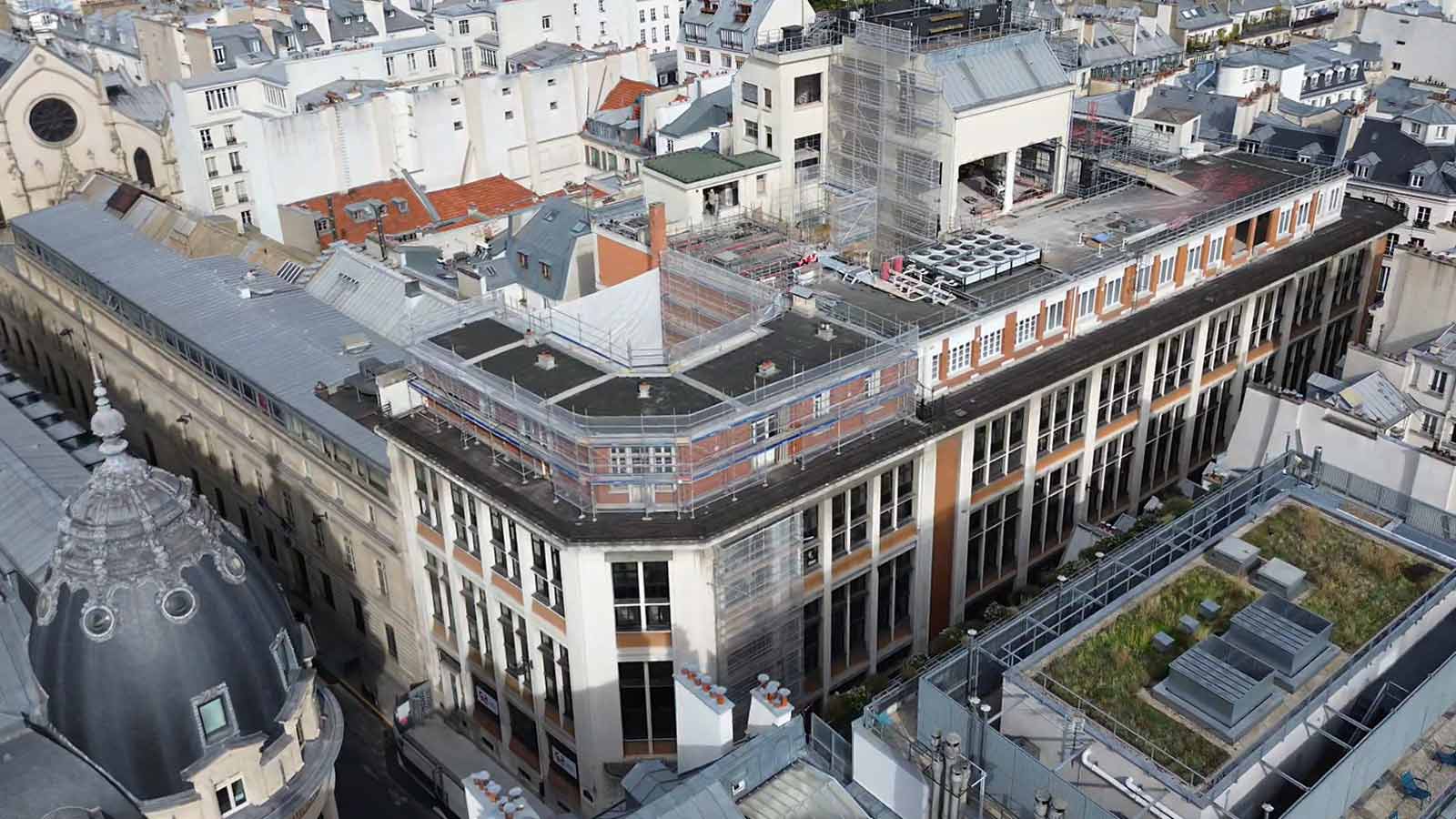
- Covivio Paris Grands Boulevards, Paris’s 9th arrondissement: The project transforms a former telephone exchange with partial protection under France’s historic monument designation. It includes restoration of the Art Deco façade, dome and heritage features.
- M62, Rue Marcadet, Paris’s 18th arrondissement: The conversion of this 1930s building showcases its original structure and volumes, reorganising circulation around a new central atrium.
- Eponym for OSESAM, Boulogne-Billancourt: The refurbishment and extension of a 1980s office development includes redesigned façades, two additional storeys and landscaped outdoor spaces.
- Terra Nova, Toulouse: The transformation of this city-centre office building preserves its atrium, red-brick façade and the materials that define its character.
What are the key stages of a major refurbishment project?
Assess the existing building
The first stage involves analysing the building’s condition and its technical, regulatory and environmental constraints.
This assessment identifies opportunities for transformation and anticipates risks that could affect the project.
Develop the design
Design studies establish architectural, technical and environmental solutions suited to the client’s objectives.
They also help refine the budget and proposed delivery schedule.
Obtain the necessary approvals
Depending on the proposed works, several procedures may be required:
- Apply for a building permit.
- Submit a prior declaration of works.
- Obtain accessibility-related approvals.
- Secure fire safety approvals.
Carry out the works
The construction phase brings together numerous specialist teams and requires rigorous coordination.
The project becomes more complex when work takes place in an occupied building while some activities continue.
Bring the building into operation
Once the works are complete, bringing the building into operation involves checking its performance and helping users become familiar with the new spaces.
This stage helps ensure that the performance objectives established at the outset are achieved.
What regulatory requirements apply to major refurbishment?
Major refurbishment projects must address a range of regulatory requirements that directly influence their design.
Works must meet energy performance requirements
The works must comply with regulations applicable to existing buildings and contribute to improving their energy performance.
Buildings must meet accessibility requirements
Buildings open to the public or used as workplaces must meet accessibility requirements for people with disabilities.
Fire safety systems may require upgrading
Refurbishment projects often involve upgrading fire safety measures to comply with current regulations.
France’s Tertiary Decree sets energy reduction targets
Owners and occupiers of commercial buildings are subject to energy consumption reduction targets.
Major refurbishment often provides an opportunity to bring properties into compliance with these requirements.
Surveys must identify asbestos and lead risks
Mandatory surveys must be carried out before work begins to identify potential risks associated with asbestos or lead.
Why work with a specialist in major refurbishment?
Major refurbishment requires a comprehensive approach that brings architectural and engineering expertise together with construction cost management, works coordination and environmental expertise.
Working with a specialist helps anticipate technical and regulatory constraints, validate design decisions and control delivery schedules.
At GA Smart Building, we support clients with major refurbishment and energy renovation projects, alongside changes of use and the transformation of commercial buildings. Our integrated approach brings design, engineering and delivery together to optimise the performance of existing properties. It addresses users’ needs while reducing carbon emissions and enhancing asset value.
Where appropriate, we also draw on our off-site expertise to reduce disruption, improve schedule certainty and ensure higher standards of workmanship.
Renovation aims to improve an existing building. Major refurbishment involves substantial changes to its structure, technical systems or overall layout.
Office buildings, hotels, industrial facilities, retail properties and managed residences can undergo major refurbishment.
Yes. It often provides an opportunity to upgrade the building envelope and technical systems to reduce energy consumption over the long term.
This depends on the extent of the works. Significant changes to the building’s external appearance, an extension, additional storeys or a change of use may require specific administrative approvals.

Author
Gilles De Jouvencel
Managing Director, Renovated Unit