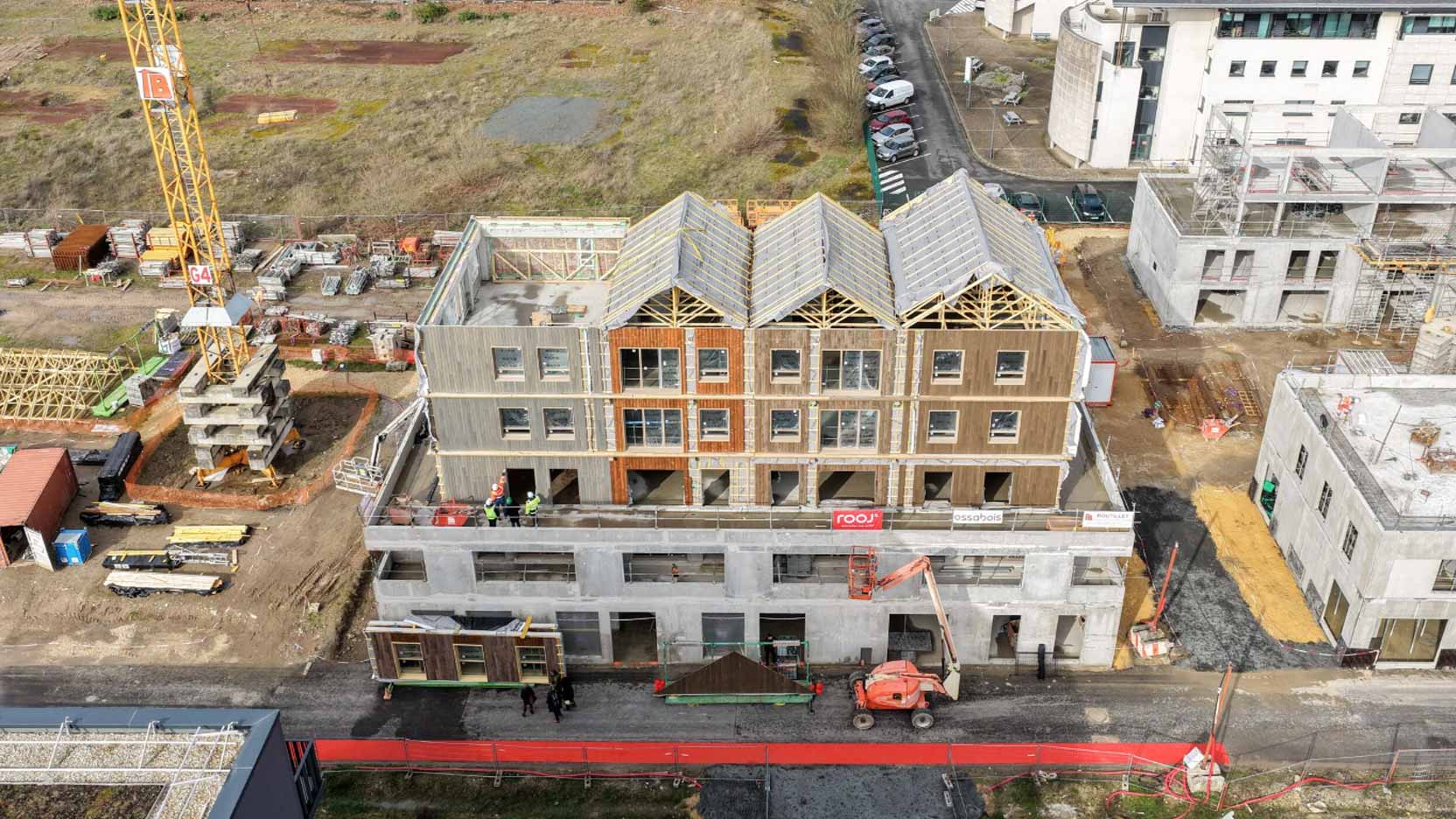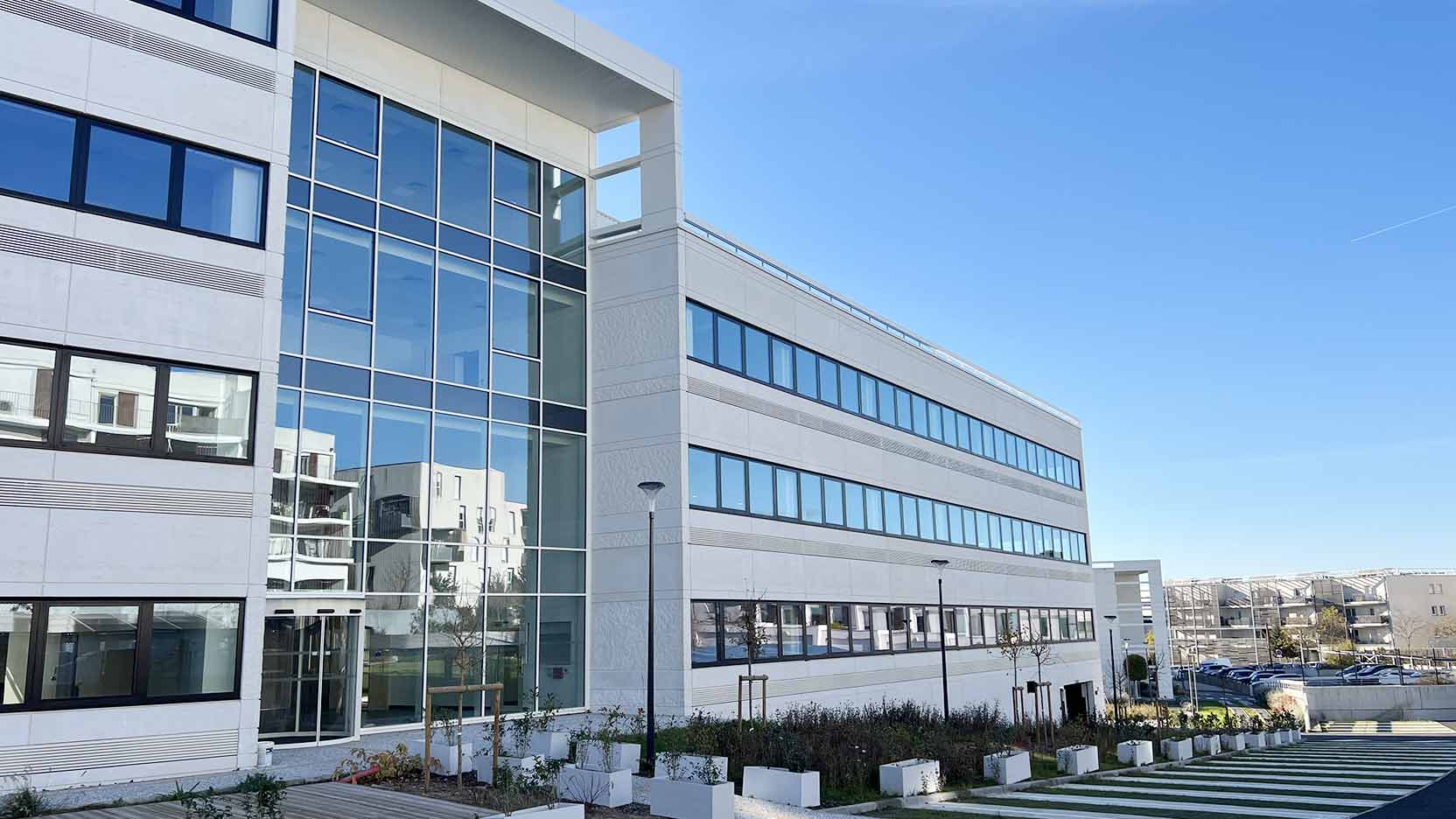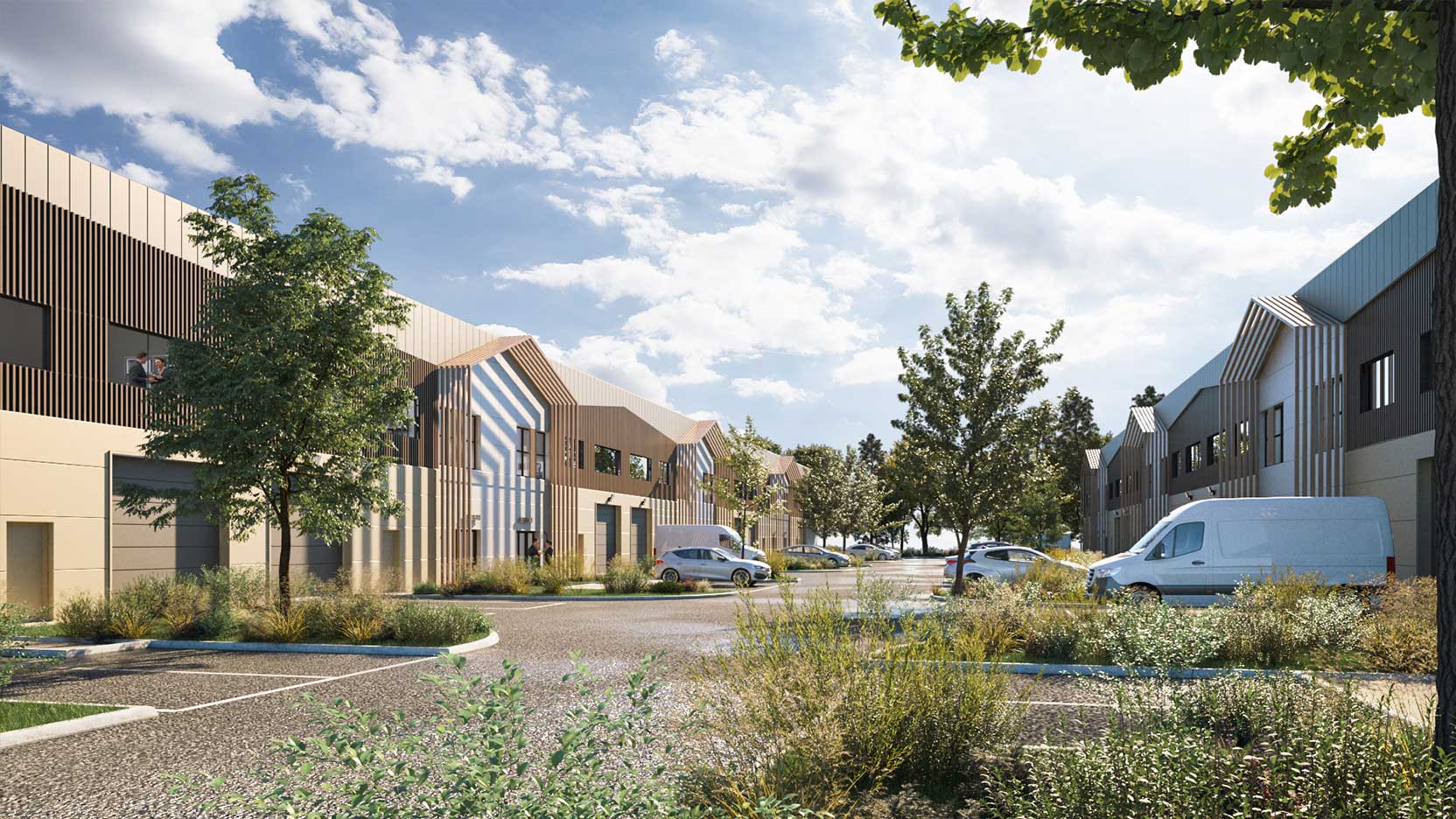
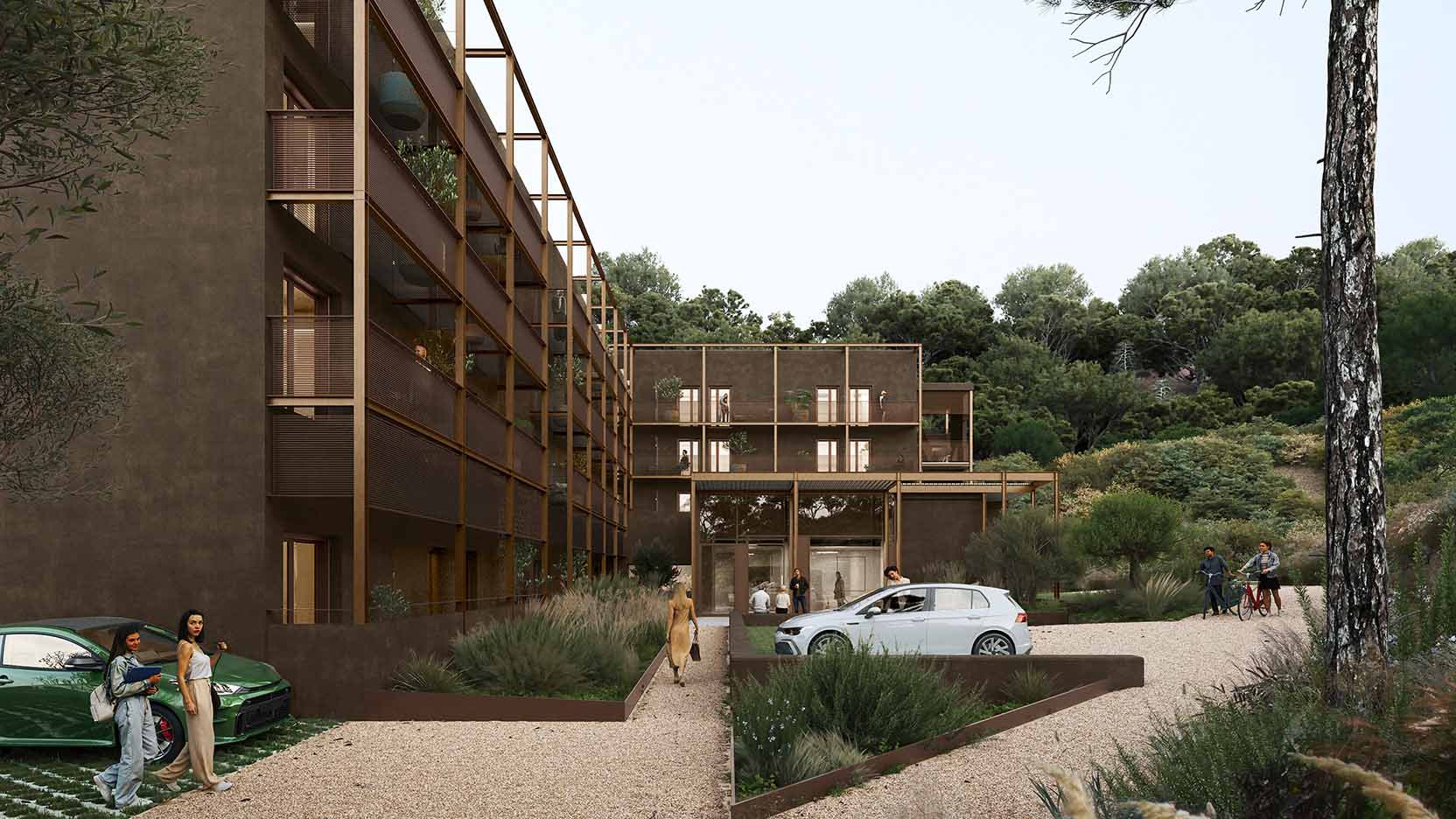
GA Smart Building, Equilis, FTI (Foncière Transformation Immobilière, Action Logement Group), and Unicil announce the granting of the building permit and the operational launch of the Omega Valbonne project. This project aims to transform a former hotel located on Rue Ludwig Van Beethoven in Valbonne into a social student residence with 104 housing units, in the center of Sophia Antipolis.
This flagship operation is based on the transformation of the former Omega hotel, complemented by a new extension, to create a social student residence. It represents the first phase of a broader redevelopment project for Place Sophie Lafitte, the historic heart of Sophia Antipolis, inherited from the 1970s urban planning scheme and supported by the Sophia Antipolis Agglomeration Community (CASA) and the City of Valbonne.
A secure and structured framework serving the public interest
FTI (Action Logement Group) specializes in transforming obsolete or vacant tertiary assets into affordable, sustainable, and useful housing that responds to local needs. Its approach relies on enhancing existing buildings, controlling costs, and applying a demanding environmental strategy focused on reuse and energy efficiency. Through long-term building leases (around 50 years), which separate land ownership from the building through a leasehold structure, FTI creates an economic balance beneficial for housing operators—public or private, social or intermediate. In this case, Unicil finances the construction without bearing the cost of land acquisition, enabling the creation of accessible, high-quality housing.
The Omega transformation project is based on a 52-year building lease concluded between FTI, GA Smart Building, and Unicil, and involves several partners with complementary roles:
- GA Smart Building and Equilis act as project owners
- FTI acts as the landholder and owner of the asset
- Unicil operates the residence as a social housing landlord for the duration of the building lease with FTI
- AREF will manage the student residence
- Comte Wollenweider Architectes acts as the architect
An ambitious transformation focused on user experience and environmental performance
The project covers 3,000 m² and combines the rehabilitation of the existing building with a new extension. The objective is to offer students a functional, modern, and comfortable living environment in a highly sought-after location.
Key features of the residence include:
- 104 social student housing units
- 100% of the units equipped with a private outdoor space of approximately 4 m² each
- Preservation of the existing concrete structure from the 1980s, combined with the construction of a low-carbon concrete extension
- A transformation approach based on real estate recycling, reducing the carbon footprint compared to new construction
- A ground-floor commercial space
A demanding environmental strategy
The Omega Valbonne project incorporates high environmental standards adapted to a transformation project:
- Extensive use of bio-based materials (16 kg per m², representing a high level for a renovation project)
- BBC Rénovation 2024 certification for the rehabilitated section
- RE2020 (2025 threshold) for the new extension
A structuring project for Sophia Antipolis
Omega Valbonne illustrates a strong trend in the sector: transforming existing buildings to produce useful and sustainable housing close to employment and education hubs.
The project contributes to the urban redevelopment of Place Sophie Lafitte and strengthens the attractiveness of the Sophia Antipolis campus.
Estimated timeline
- Construction start: early January 2026
- Estimated completion: June 2027
- First residents expected: September 2027
A real estate transformation project serving local student housing needs
The Provence-Alpes-Côte d’Azur region, with around 190,000 students, is the second most expensive region in France in terms of rent, after Île-de-France. According to the CESER, rent can represent up to 60–65% of the budget of the least affluent students, leading some to abandon their studies during the year for financial reasons. The Territorial and Partnership Observatory for Student Housing in the Alpes-Maritimes (OTLE06) estimates that 45% of students in the region pay between €500 and €699 in rent and 15% pay more than €700; 50% have a monthly disposable income of only €200 to €400 after housing costs.
In a context marked by an 18% increase in the number of students over the past 15 years, the creation of affordable housing has become a major challenge for the region.
With its 104 social student housing units, the Omega Valbonne project directly addresses this need by offering accessible, high-quality housing close to education hubs and training centers, thereby contributing to improved quality of life for students.
This project perfectly illustrates our commitment in the PACA region: being a locally rooted player capable of responding to the needs of the territory and its residents. In Valbonne, at the heart of Sophia Antipolis, we are proud to contribute to the redevelopment of a historic site by giving new life to a building and creating a social student housing offer that is essential for the balance of the region. We will continue the transformation of Place Sophie Lafitte in the same spirit.
At Equilis, we promote a vision of useful real estate, rooted in local territories and oriented toward the future. This project fully illustrates our expertise: transforming existing buildings to create living spaces that are more sustainable, aesthetic, and meaningful. Located just steps from two major schools (École des Mines and SKEMA Business School), the OMEGA residence directly responds to a strong local need for affordable student housing. We are proud to contribute, alongside our partners, to this exemplary redevelopment in the heart of Sophia Antipolis.
This transformation project in Valbonne illustrates FTI’s mission: deploying innovative engineering to produce affordable and sustainable housing that strengthens the link between employment and housing. By transforming this hotel in Valbonne, we demonstrate our ambition to recreate value from existing buildings in order to meet the needs of the population. In a context of land scarcity and housing pressure affecting all citizens—including students—we must build sustainably by rethinking current and future uses. Our model, and more broadly real estate transformation, meets the expectations of local territories.
We are committed to all forms of housing production to support cities. This residence is fully part of a territorial project where the creation of housing—essential to the lives of our citizens, especially students who are increasingly struggling to find accommodation in this context of crisis—contributes to territorial development and meets residents’ needs. Our joint intervention with FTI enables us to deliver new, high-quality and affordable housing in extremely constrained areas where land is scarce and very expensive.

Contact
Amandine Guillaume
Director of Communications & Marketing